7 min read
Maliyo Games Is Part of Google Play's First Indie Games Fund in Africa
Some news you share quickly. This one we have been sitting with, smiling at our screens, and rereading to make sure it is real.
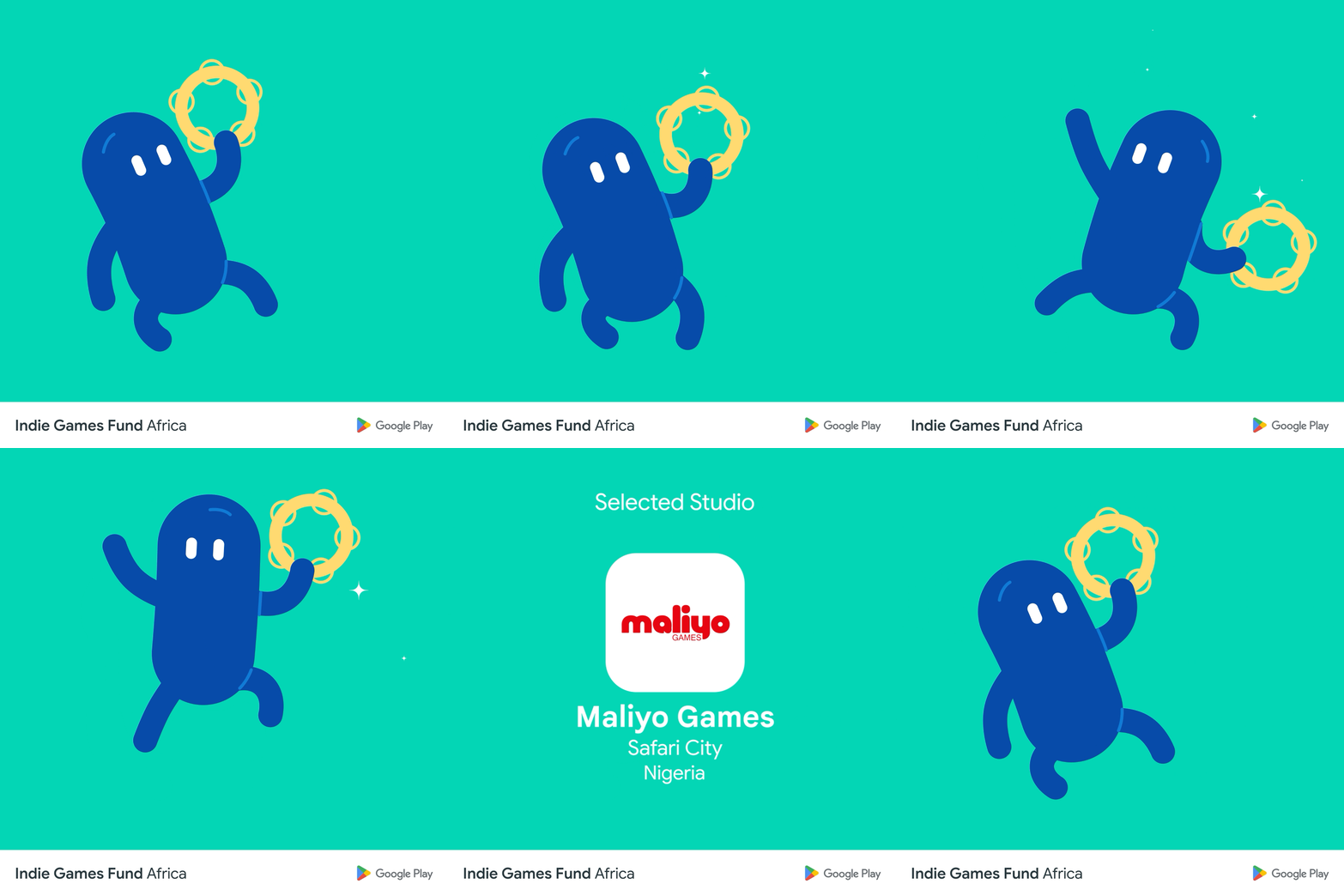
Maliyo Games has been selected for the 2026 Google Play Indie Games Fund in Africa, the first fund of its kind that Google Play has run on the continent. Out of a field of studios from across Sub-Saharan Africa, ten were chosen. We are one of them, and our game Safari City is the title Google is backing.
For a studio that started in Lagos in 2012, building games rooted in the way we actually live, talk, laugh and argue about property, this one means a lot.
The news at a glance
What it is: Google Play's inaugural Indie Games Fund in Africa, a US$1 million commitment.
Who got in: 10 independent studios from Nigeria, South Africa, Ghana and Kenya.
What each studio receives: equity-free funding ranging from US$50,000 to US$200,000, plus mentorship and technical support.
Our game: Safari City, our match-3 puzzle and renovation game.
When it was announced: 28 October 2026.
What is the Google Play Indie Games Fund?
Google Play announced the fund in early July 2026. The idea is simple and, honestly, long overdue. Africa has no shortage of creative talent or storytelling, but access to capital has held a lot of promising studios back. Google Play set out to help close that gap with a US$1 million fund for ten independent studios.
The money is non-dilutive, which means studios keep their equity. Google has been clear that the package goes beyond cash. Selected studios get hands-on one-to-one mentorship from Google Play specialists, tailored technical guidance, commercial and growth resources, and technical support from Unity, the game engine many of us build with every day.
As Ben McOwen Wilson, Google Play's Managing Director for Europe, the Middle East and Africa, put it when the fund launched, the aim is to unlock the talent of local studios and help them tell uniquely African stories to a global audience. We could not have said it better ourselves.
Who could apply?
The bar was real. To apply, a studio had to:
Be based in one of the 32 eligible Sub-Saharan African countries, and officially registered there.
Be a privately owned, non-publicly listed independent studio with 50 or fewer employees.
Have already launched a game on mobile, PC or console.
Applications opened on 3 July 2026 and closed at 12 noon UTC on 31 July 2026. Google then reviewed the entries and announced the final ten in late October.
Studios that are selected also make a commitment in return: to publish their game on Google Play and to take part in Google Play Pass, non-exclusively, for two years.
Meet the cohort
We are in very good company. Here are the ten studios Google Play selected, and the games they are building:
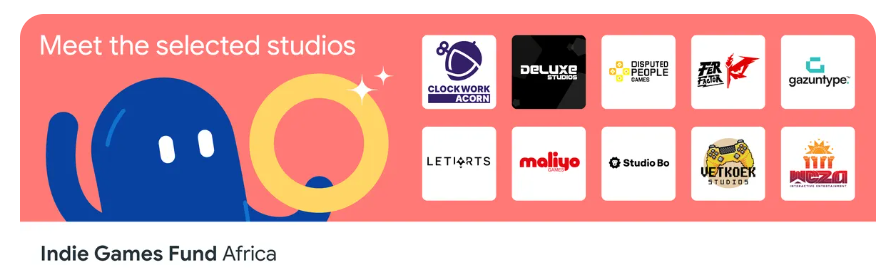
Clockwork Acorn (South Africa): Jetstream, a calming puzzle game with over 100 hand-crafted levels about guiding a plane through the clouds.
Deluxe Entertainment Studios (Nigeria): Rasta Santa, a 2D platformer set in Lagos.
Fer Factor (Nigeria): Chore Master, a cozy cleaning game that turns messy rooms into spotless ones.
Gazuntype Entertainment (Nigeria): Go North, a story-driven exploration adventure.
Disputed People (South Africa): Mitts and the Divine Recipes, a retro-inspired 3D adventure about cooking, puzzles and the world of Epicuria.
Leti Games (Ghana): Sweave, a rhythm-based mobile game inspired by traditional African weaving.
Maliyo Games (Nigeria): Safari City, a match-3 puzzle and renovation game.
Studio Bo (South Africa): Idle Sands, a cozy idle-clicker about robots cleaning up a beach.
Vetkoek Studios (South Africa): Taxi Ranked, a comic-book style driving game about South African minibus taxis.
Weza Interactive (Kenya): Riziki, a free-to-play rhythm adventure set to Afrobeats.
Puzzle, rhythm, platformers, simulation, driving, survival and strategy. Different genres, different cities, one shared thread: games that could only have come from here. Four of the ten studios are Nigerian, which is a proud moment for the Lagos and wider Nigerian games community.
Congratulations to every studio on the list. We are cheering for all of you.
Why Safari City?
Safari City is where Maliyo's whole philosophy lives in one game.
On the surface, it is a match-3 puzzle game. Underneath, you are a property developer taking worn-down houses and turning them into homes. You meet clients like Mama Gold, learn what they are hoping for, and help them start again. The settings are inspired by real African cities, including Lagos and Nairobi, and the architecture and details are things players recognise the moment they see them.
That is the point. We build games around shared experiences, the things so many of us grew up around, like the love of property, design and a good before-and-after. When a player sees their own city reflected back at them in a game, something clicks.
Safari City launched in December 2024, and the past year has been the busiest of its life:
It was recognised as Most Impactful Mobile Game at the Games Industry Africa Awards 2025.
The Maliyo team went all in on it. Design, art, engineering, audio, QA and marketing aligned around making it a world-class, story-driven, culturally grounded match-3 experience, with over 1,000 levels now live.
Graduates from our GameUp Africa programme contributed minigames inside Safari City, which shows what happens when a talent pipeline feeds a live product.
The road that got us here
We want to be honest about something. Google has not published a scorecard or detailed judging criteria for how the ten studios were chosen, so we will not pretend to know exactly what tipped the decision. What we can tell you is the journey we brought to the table, because it is the work we are proudest of.
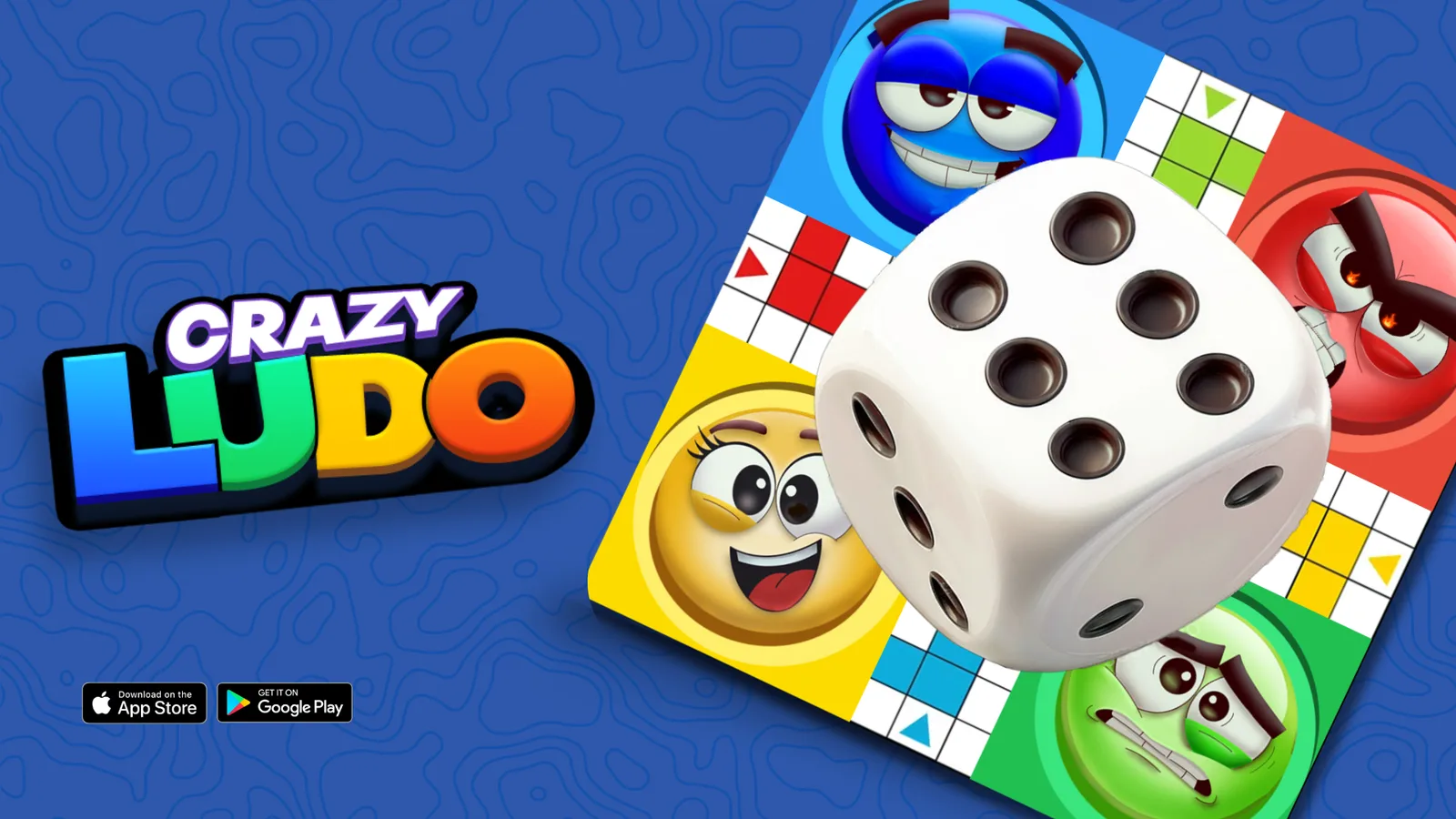
We have spent more than a decade building from Lagos for the world. Over that time, our games, including Safari City, Crazy Ludo, Whot King and Secret Letter, have found players well beyond Nigeria. Our founder and CEO, Hugo Obi, has said that Google Play has been central to that growth, with the studio passing 15 million downloads and gaining access to a global audience almost overnight.
In August 2025, Google Play featured Hugo and Maliyo in a #WeArePlay film on how local culture becomes global hits. Later that year, Apple and Google both spotlighted our games in the same season. And through GameUp Africa, we have been training the next generation of African game developers, many of whom have gone on to join studios or launch projects of their own.
None of that happened overnight, and none of it happened alone. It happened because of a team that kept showing up, and players who kept playing.
What this means for Maliyo
First, it is a vote of confidence. Being chosen by Google Play, from a competitive pool of African studios, tells us that building culturally authentic games for a global audience is a path worth backing.
Second, it gives us room to grow. Google has described the fund as support to help studios develop their games, grow their teams, reach new audiences and strengthen their businesses. For us, that lines up with what we have already said we want to do next: richer Safari City content, expanded training programmes, new creator pipelines, stronger partnerships and new IP.
Third, it puts us alongside people we respect. Working with Google Play's specialists and Unity's technical team is the kind of access that can take a studio from good to great, and we plan to make the most of every conversation.
Why this matters beyond Maliyo
A fund like this is not only about ten studios. African gaming has been growing fast, but too many talented developers hit the same wall when it is time to scale: funding, distribution and visibility. Equity-free capital that comes with real mentorship is one of the clearest ways to knock that wall down.
When studios across Nigeria, South Africa, Ghana and Kenya get backed at the same time, it sends a message to every developer building in a bedroom, a co-working space or a small office somewhere on this continent: your stories have a global audience, and there are people who want to invest in them.
Thank you
To Google Play, thank you for putting real resources behind African indie studios. To the other nine studios, congratulations, and we look forward to seeing your games shine. To our team, thank you for the late nights and the high standards. And to every player who has restored a house in Safari City, shared a level with a friend or told us what they wanted to see next: this is your win too.
This is the start of a new chapter, and we are only getting started.
Ready to play? Download Safari City: Renovate & Design on Google Play and see what we have been building.
Stay close. Follow Maliyo Games on our social channels and at maliyo.com for what comes next, from new Safari City updates to GameUp Africa and MaliyoCON.